
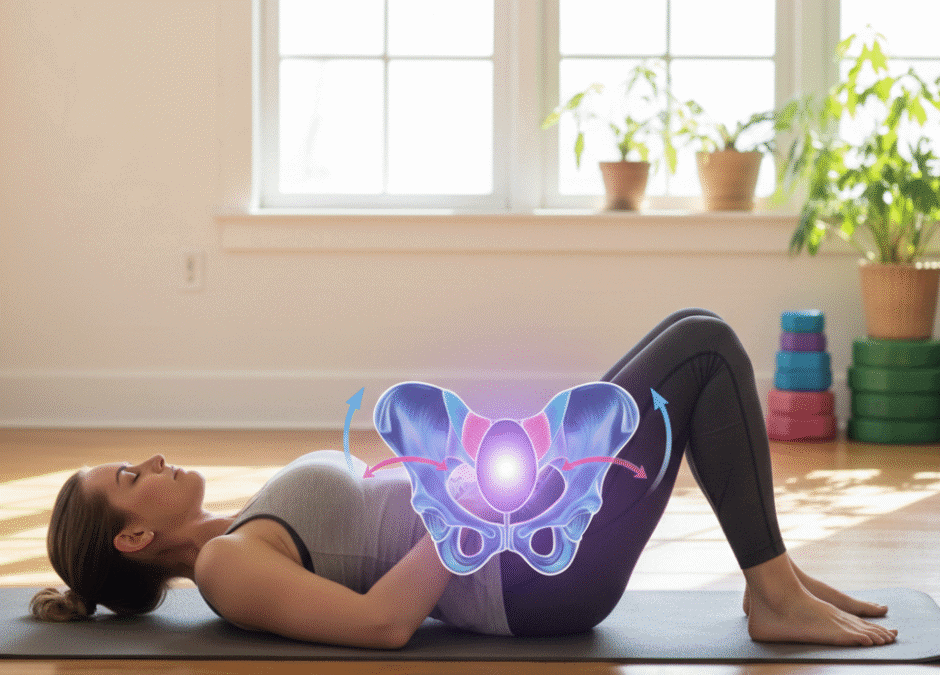
Exercises For Prolapsed Uterus: Expert Guide To Pelvic Floor Strengthening
The most effective exercises for a prolapsed uterus are Kegel exercises (pelvic floor muscle contractions), which should be performed 3-5 sessions daily with 10-15 repetitions per session. Additional beneficial exercises include glute bridges, pelvic tilts, diaphragmatic breathing, and gentle core work. These movements strengthen your pelvic floor muscles that support your pelvic organs, potentially reducing prolapse symptoms and preventing progression when done correctly and consistently under the guidance of a healthcare professional.
However, before starting any exercise program, it’s essential to understand what happens when you have a prolapsed uterus.
Understanding Uterine Prolapse And Pelvic Organ Prolapse
Pelvic organ prolapse occurs when the muscles and connective tissue around the uterus and other pelvic organs become weak, causing the uterus to sag or drop into the vaginal canal. In severe cases, the uterus may even protrude through the vaginal opening.
At Monarch Healthcare, we see many women experiencing pelvic support problems. In fact, Studies show that up to 50% of women will develop some form of pelvic organ prolapse over their lifetime. The condition is most common after menopause and in women who have had multiple vaginal deliveries.
Common Symptoms Of Uterine Prolapse
Prolapse symptoms can significantly impact your quality of life. Common symptoms include:
- Pelvic pressure or pelvic heaviness in the pelvic area
- A feeling of something bulging through the vaginal opening
- Difficulty with bowel movements or urinary frequency
- Urinary incontinence or bladder leaks
- Pelvic pain or discomfort during sexual function
- Lower abdominal pressure or fullness
Severe cases of uterine prolapse may make it difficult to urinate or have normal bowel movements. If prolapse symptoms are limiting your activity or impacting your quality of life, it’s important to seek medical advice from a healthcare professional at Monarch Healthcare.
Risk Factors
Your pelvic floor muscles, along with connective tissue and ligaments, work together to support your pelvic organs, including the uterus, bladder, rectum, and vagina. Several risk factors contribute to pelvic support problems:
- Vaginal childbirth (especially multiple deliveries)
- Menopause and decreased estrogen levels
- Chronic cough from smoking or lung conditions
- Heavy lifting or lifting heavy objects regularly
- Chronic constipation and straining during bowel movement
- Obesity, which creates downward pressure on pelvic organs
Essential Pelvic Floor Exercises For Prolapsed Uterus
First and foremost, let’s discuss Kegel exercises, also called pelvic floor muscle exercises.
Kegel Exercises: The Foundation
Kegel exercises, also called pelvic floor muscle exercises, are the cornerstone of treatment for pelvic organ prolapse. At Monarch Healthcare, our pelvic floor physical therapy specialists emphasize proper technique for maximum benefit. The technique for Kegels includes lifting the muscles upward and inward without tightening the stomach, thighs, or buttocks.
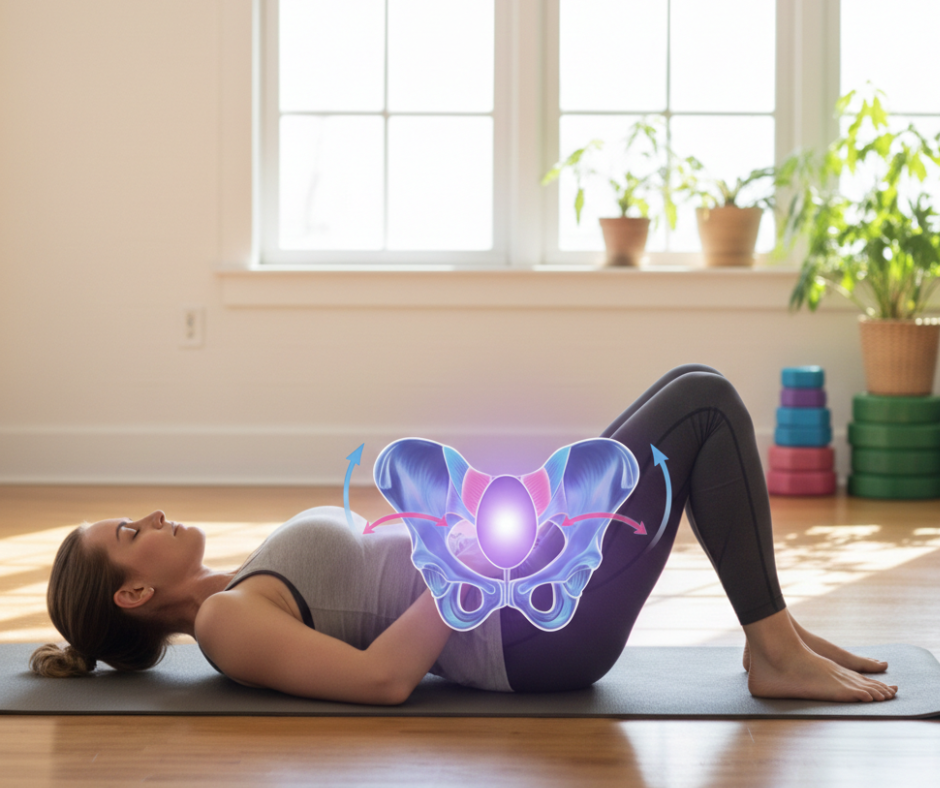
How To Perform Kegels Correctly:
- Lie on your back or sit comfortably.
- Squeeze and lift your pelvic floor muscles upward and inward (imagine stopping urine flow)
- Hold for 5-10 seconds.
- Relax completely for the same amount of time.
- Repeat 10-15 times
- Perform 3-5 sessions per day
The recommended frequency for Kegel exercises is 3-5 sessions per day. Improvement in pelvic floor strength may take 3-6 weeks of daily practice of the prescribed exercises.
Quick Flick Kegels:
- Rapidly squeeze and release your pelvic floor.
- Do 10 quick pulses
- Repeat 2-3 times
These help with stress urinary incontinence when you cough, sneeze, or laugh.
Diaphragmatic Breathing
In addition to Kegels, learning to manage abdominal pressure with proper breathing techniques is key to treating prolapse. Diaphragmatic breathing helps manage abdominal pressure and can reduce symptoms of pelvic organ prolapse.
How To Perform:
- Lie on your back or sit comfortably.
- Place one hand on your chest and one on your lower abdomen.
- Inhale deeply through your nose, allowing your belly to expand.
- As you exhale, gently engage your pelvic floor muscles.
- Repeat for 5-10 breaths
Practicing diaphragmatic breathing can help keep the pelvic floor operating normally and reduce tension.
Bridge Pose (Glute Bridges)
Another essential exercise is the bridge pose involves lying on your back with your knees bent, lifting your hips toward the ceiling to strengthen your glutes and pelvic floor. Bridge exercises help coordinate breathing with pelvic floor and core muscles, managing abdominal pressure during movement.
How To Perform:
- Lie on your back with knees bent, feet flat on the floor.
- Engage your pelvic floor muscles first.
- Slowly lift your hips until your body forms a straight line.
- Hold for 5-10 seconds while breathing normally.
- Lower slowly to the starting position.
- Repeat 10-12 times
Pelvic Tilts
Pelvic tilts improve pelvic mobility and activate core muscles, which can help support pelvic organs.
How To Perform:
- Lie on your back with knees bent and feet flat on the floor.
- Gently tilt your pelvis to flatten your lower back.
- Engage your pelvic floor muscles as you tilt.
- Hold for 5 seconds
- Return to the starting position.
- Repeat 10-15 times
Wall Squats
How To Perform:
- Stand with your back against a wall, feet shoulder-width apart.
- Engage your pelvic floor muscles.
- Slowly slide down the wall, bending your knees to about 45-60 degrees.
- Hold for 5-10 seconds.
- Slowly slide back up.
- Repeat 8-10 times
Critical note: Never squat deeply if you have a prolapsed uterus. Deep squats increase intra-abdominal pressure and downward pressure on pelvic organs.
Exercises To Avoid With Pelvic Organ Prolapse
At Monarch Healthcare, we counsel patients to avoid activities that increase intra-abdominal pressure, including high-impact sports and heavy weightlifting. High-impact movements and intense core work should be avoided as they increase internal pressure.
Avoid:
- Traditional sit-ups or crunches
- Heavy lifting or lifting heavy objects
- High-impact jumping or running.
- Deep squats below 90 degrees
- Double leg lifts
- Long planks
Listening to your body and backing off from exercises that increase symptoms is crucial. Swimming, water aerobics, and stationary cycling are low-impact exercises that are beneficial for managing pelvic floor health.
Creating Your Exercise Program
Beginner Routine (Weeks 1-4):
- Kegel exercises: 3 sets of 10, performed 3-5 sessions per day.
- Diaphragmatic breathing: 5-10 breaths, twice daily
- Pelvic tilts: 10-15 repetitions, once daily
Intermediate Routine (Weeks 5-12):
- Kegel exercises: 3 sets of 10-15, 3-5 sessions daily
- Bridges: 10-12 repetitions, 5 times per week
- Wall squats: 8-10 repetitions, 3-4 times per week
- Pelvic tilts: 15 repetitions, daily
Making a habit out of Kegel exercises can help reduce prolapse symptoms and prevent further prolapse.
The Role Of Pelvic Floor Physical Therapy
Pelvic floor physical therapy is often the first line of treatment for pelvic organ prolapse. A pelvic floor physical therapist can help determine the best exercises and treatment options.
For personalized plans, consider consulting a pelvic floor physical therapist who can provide biofeedback training. Biofeedback can help ensure correct muscle engagement during pelvic floor muscle training. Pelvic floor physical therapy includes education and behavioral strategies in addition to exercises.
Additional Treatment Options
Vaginal Pessary
A vaginal pessary is a rubber or silicone ring-shaped device used to support pelvic organs. Your Monarch Healthcare provider can fit you with a pessary that holds your uterus and other pelvic organs in their normal position and reduces pelvic pressure.
Surgical Options
Surgical options for uterine prolapse may be necessary in severe cases. At Monarch Healthcare, our gynecological surgeons can discuss surgical treatment options if needed.
Lifestyle Modifications To Reduce Prolapse Symptoms
Small tweaks to daily routines can help reduce pressure on the pelvic floor. Avoiding straining during activities like lifting or bowel movements is important for managing prolapse symptoms.
Key Modifications:
- Stay well-hydrated and eat plenty of fiber.
- Never strain during bowel movements.
- Engage pelvic floor muscles before heavy lifting.
- Maintain a healthy weight.
- Address chronic cough with your Monarch Healthcare provider.
- Avoid heavy exertion
What Research Says
Research published in the American Journal Of Obstetrics And Gynecology demonstrates the effectiveness of pelvic floor muscle training for women with pelvic organ prolapse. The evidence confirms that supervised pelvic floor muscle training significantly improved prolapse symptoms and quality of life, with some women able to avoid surgery through exercise alone.
Your Partner In Pelvic Health
At Monarch Healthcare, our team understands that pelvic support problems can disrupt normal activities. Our comprehensive approach includes expert pelvic floor physical therapy, vaginal pessary fitting, customized exercise programs, and surgical options when needed.
If you’re experiencing symptoms of uterine prolapse, including pelvic pressure, difficulty with bowel movements, bladder leaks, or concerns about your pelvic health, contact Monarch Healthcare today to schedule a pelvic exam and consultation.
Schedule your appointment with Monarch Healthcare’s pelvic health specialists today and take the first step toward strengthening your pelvic floor and reclaiming your quality of life.
Frequently Asked Questions
How Long Does It Take To See Results From Pelvic Floor Muscle Exercises?
Most women notice improvement within 6-12 weeks of consistent daily pelvic floor muscle training. Maximum benefit typically occurs after 3-6 months.
Can Pelvic Floor Exercises Completely Reverse Uterine Prolapse?
Pelvic floor exercises can ease symptoms and sometimes reverse a mild case of uterine prolapse. However, severe pelvic prolapse typically requires additional treatment options like a vaginal pessary or surgery.
How Many Kegel Exercises Should I Do Per Day?
The recommended frequency is 3-5 sessions per day, with 10-15 repetitions per session (30-75 daily contractions total).
Should I Feel Sore After Pelvic Floor Muscle Exercises?
You shouldn’t feel significant soreness. If you do, you may be over-exercising or using the wrong muscles. A pelvic floor PT at Monarch Healthcare can verify proper technique.
Do I Need To Do Pelvic Floor Muscle Exercises Forever?
Yes. Once you’ve achieved strengthening your pelvic floor, you can reduce to a maintenance level, but stopping completely will lead to weakening over time.